Caregiver Burnout: Why It Happens and What Can Help
By David Hall, PhD, Founder & CEO, Guiding Light Dementia Care
Caring for a loved one with dementia is one of the most meaningful roles a person can take on.
It can also be one of the most challenging.
Many caregivers find themselves feeling overwhelmed, exhausted, or emotionally drained over time. This experience is often referred to as caregiver burnout.
It is more common than people realize.
"Burnout is not a sign of failure. It is a sign that more support is needed."
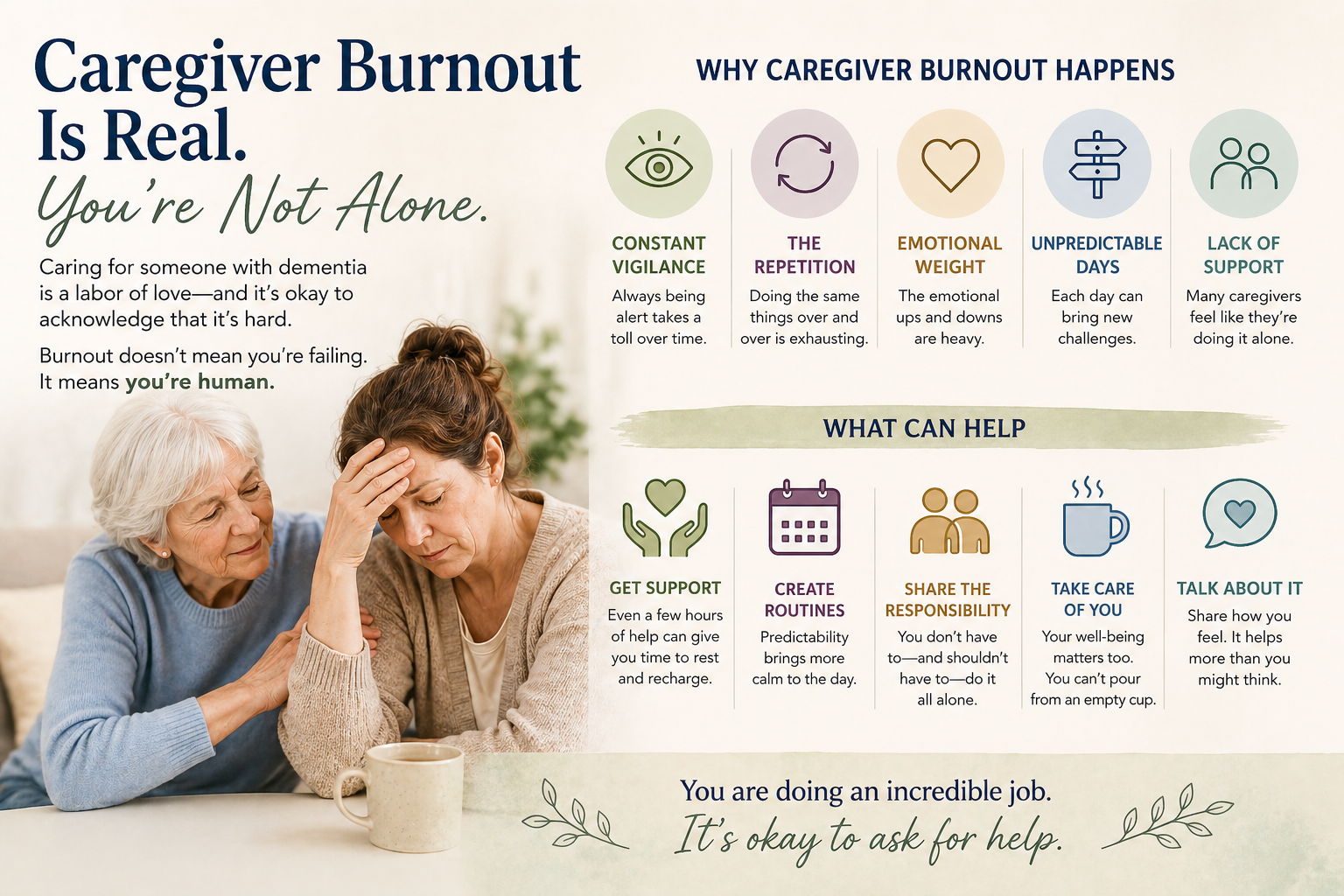
Why Caregiver Burnout Happens
Caregiving involves a unique combination of physical, emotional, and mental demands. For individuals supporting someone with dementia, these challenges are often amplified. Some of the most common contributors include:
- Constant vigilance — There is often a need to be alert at all times to ensure safety.
- Repetition — Answering the same questions or managing repeated behaviors can be mentally exhausting.
- Emotional strain — Watching a loved one change over time can be deeply difficult.
- Unpredictability — Each day can feel different, making it hard to establish a sense of control.
- Lack of support — Many caregivers take on this role largely on their own.
Over time, these factors can build and lead to fatigue, stress, and a sense of being overwhelmed.
What Can Help
While every situation is different, small changes can often make a meaningful difference.
- Introducing support — Even a few hours of help each week can provide relief and allow caregivers time to rest and reset.
- Creating predictable routines — Structure can reduce uncertainty and make daily life feel more manageable.
- Sharing responsibility — Involving others — family members or professionals — can reduce the burden on any one person.
- Acknowledging limits — Recognizing that no one can do everything alone is an important step.
A Different Way to Think About Burnout
Burnout is often framed as something to push through.
In reality, it can be a signal.
- A signal that more support is needed
- A signal that the current approach may not be sustainable
- A signal that it's time to make adjustments
Caregiving is not meant to be done in isolation.
Supporting Caregivers
At Guiding Light Dementia Care, we work alongside families to help reduce the pressure that often leads to burnout. That may mean providing consistent in-home support, helping establish routines, or simply being part of a broader care team.
If you are caring for someone with dementia and feeling overwhelmed, you are not alone. And there are ways to make things more manageable.
Talk to our teamContinue Reading