Why Home Care Breaks Down (and How to Prevent It)
By David Hall, PhD, Founder & CEO, Guiding Light Dementia Care
When families begin home care, things often start with a sense of relief.
There is help. There is a plan. There is support in place.
But over time, some families begin to feel that things are not working as well as they had hoped. Schedules feel inconsistent. Care feels less predictable. Stress begins to increase again.
In many cases, this is not due to a single major issue. It is the result of small breakdowns that accumulate over time.
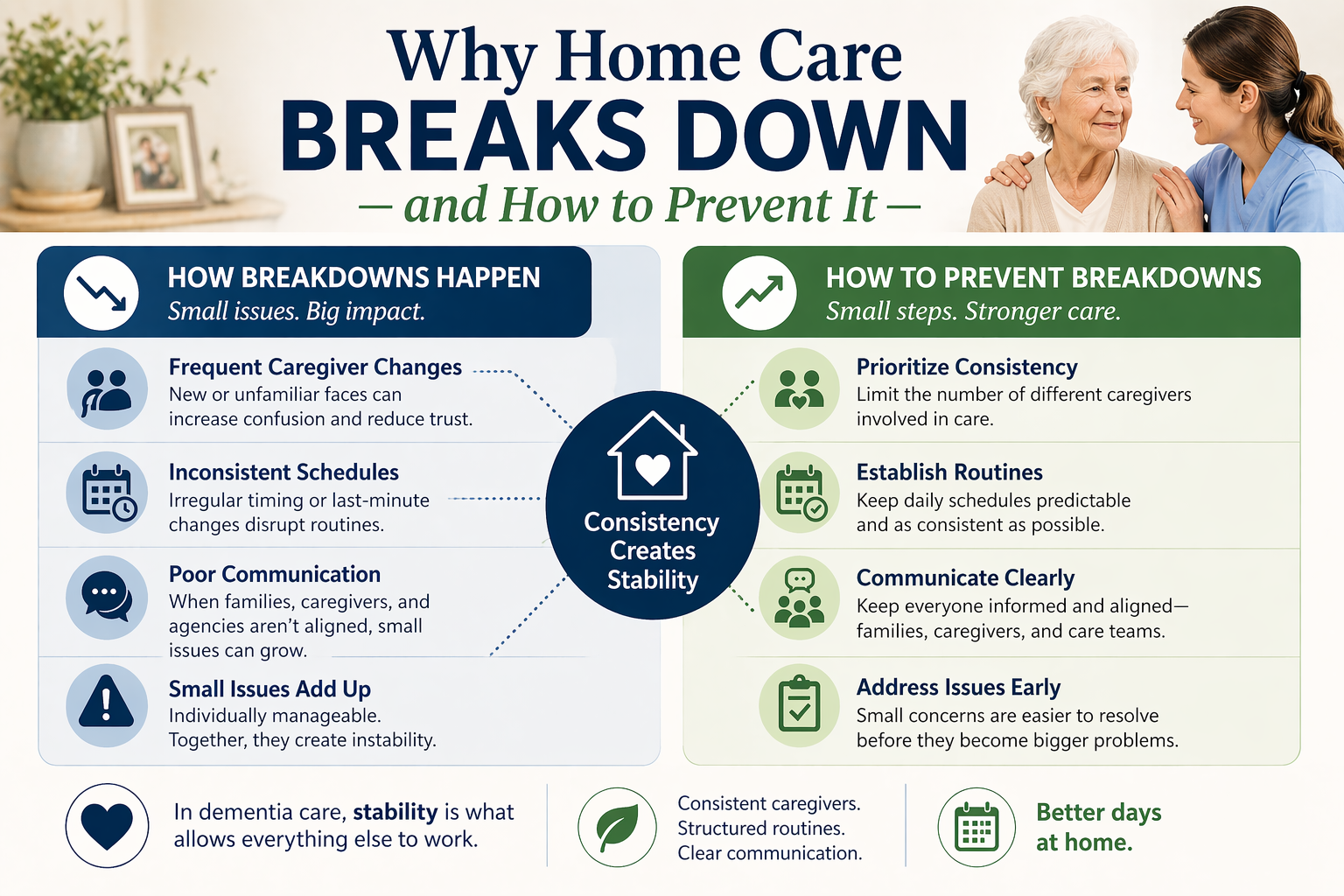
How Breakdowns Happen
Home care can become unstable when there are frequent changes in:
- Caregivers — Seeing new or unfamiliar caregivers can increase confusion and reduce trust.
- Schedules — Irregular timing or last-minute changes can disrupt routines.
- Communication — When families, caregivers, and agencies are not aligned, small issues can grow.
Individually, these may seem manageable. Together, they can create a sense that care is no longer stable.
Why Consistency Matters So Much
For someone living with dementia, consistency is not just a preference. It is foundational.
Familiar caregivers
Predictable routines
Clear communication
These elements reduce confusion and help create a calmer, more supportive environment. When consistency is present, care tends to feel steady. When it is not, things can quickly feel unsettled.
How to Prevent Breakdown
While no system is perfect, there are ways to reduce the likelihood of breakdown:
- Prioritize caregiver consistency — Limit the number of different people involved in care whenever possible.
- Establish structured routines — Keep daily schedules as predictable as possible.
- Maintain clear communication — Ensure families, caregivers, and care teams are aligned and informed.
- Address small issues early — Minor concerns are often easier to resolve before they grow.
A Different Way to Think About It
Instead of asking, "Is care working right now?"
It can be helpful to ask, "Is care stable over time?"
That shift can help families identify potential issues before they become larger problems.
Our Approach
At Guiding Light Dementia Care, we focus on building stability from the start. That includes consistent caregivers, structured routines, and ongoing communication with families.
Because in dementia care, stability is what allows everything else to work.
Talk With Our TeamContinue Reading