Lewy Body Dementia: How It Differs and What Care Actually Looks Like
By David Hall, PhD, Founder & CEO, Guiding Light Dementia Care
Lewy body dementia is the second most common form of progressive, degenerative dementia after Alzheimer's disease, affecting an estimated 1.4 million Americans. Yet it remains one of the least understood — frequently misdiagnosed, often confused with Alzheimer's or Parkinson's disease, and sometimes not identified at all until well into its progression.
For families navigating a Lewy body diagnosis, that lack of recognition compounds an already difficult situation. The disease behaves differently from Alzheimer's. The care it requires is different. And the mistakes that can be made — including well-intentioned medical decisions that cause serious harm — are specific to this disease in ways that matter enormously.
This article is intended to help families understand what Lewy body dementia actually is, how to recognize it, and what good care looks like in practice.
What is Lewy body dementia?
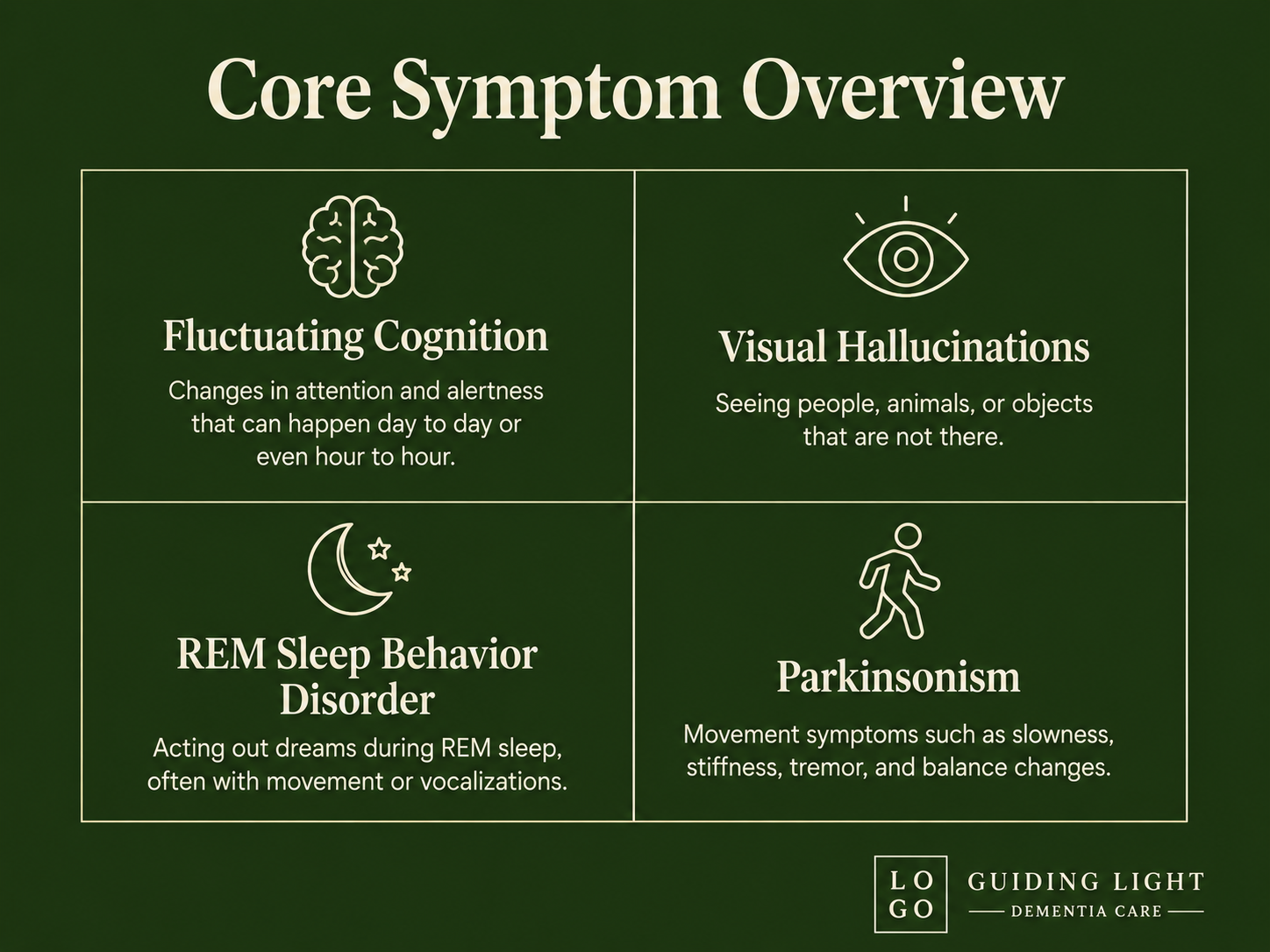
The four hallmark features that distinguish Lewy body dementia from other forms of dementia.
Lewy body dementia (LBD) is an umbrella term that covers two closely related diagnoses: dementia with Lewy bodies (DLB) and Parkinson's disease dementia (PDD). Both involve the buildup of abnormal protein deposits — called Lewy bodies — in the brain. The difference between the two diagnoses is largely one of timing: in DLB, cognitive symptoms appear before or alongside movement symptoms; in PDD, a Parkinson's diagnosis typically precedes cognitive decline by a year or more.
In practice, the distinction matters less than understanding what Lewy body dementia does to a person. Unlike Alzheimer's, which primarily affects memory in its early stages, Lewy body dementia attacks a broader range of brain functions from the outset — cognition, movement, behavior, and autonomic function all at once. That breadth is what makes it so challenging to live with and so challenging to care for.
How Lewy body dementia differs from Alzheimer's
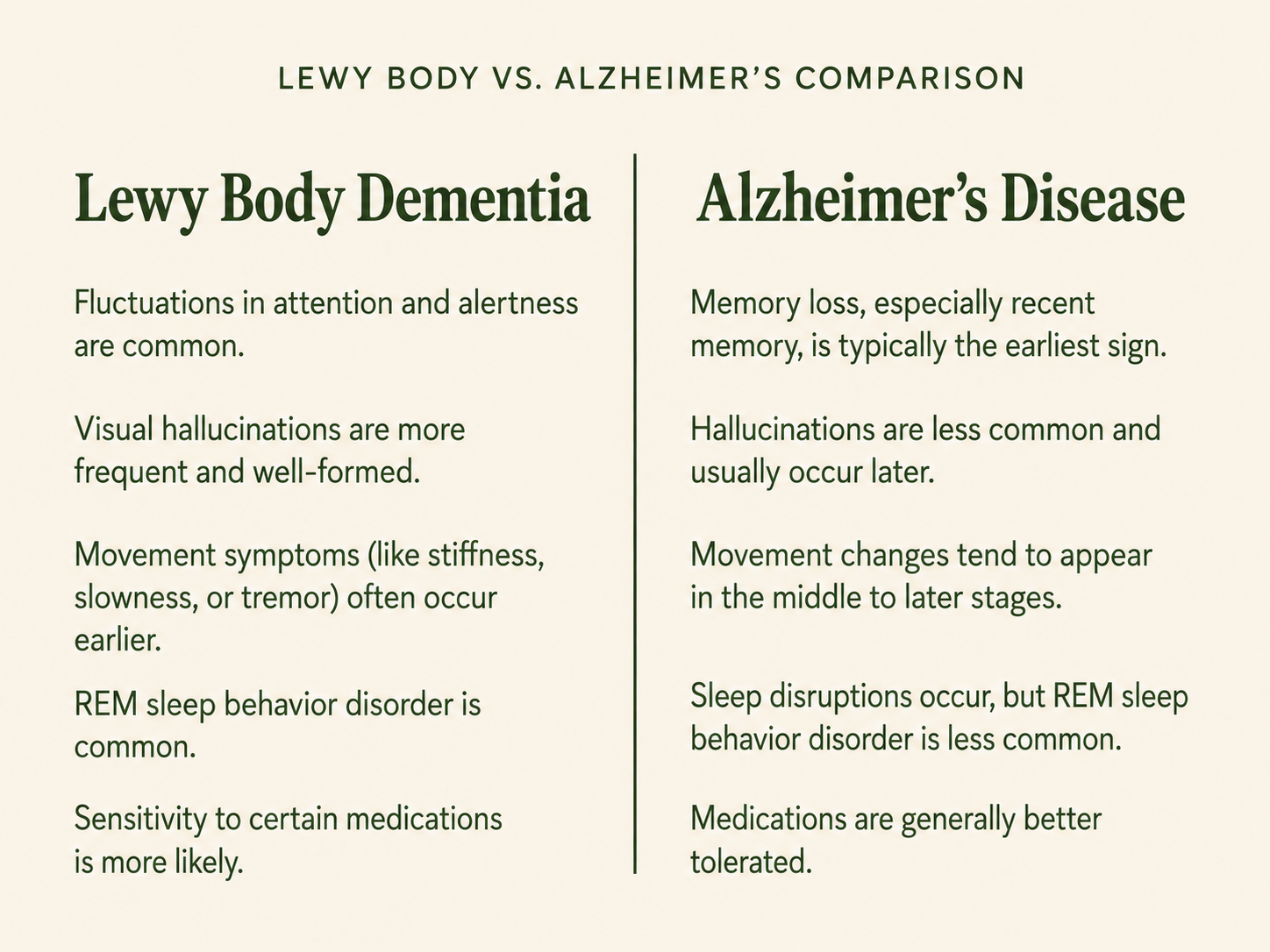
Lewy body dementia and Alzheimer's disease share some features but differ in important ways that affect diagnosis, care, and medication safety.
Families who come to a Lewy body diagnosis after suspecting Alzheimer's are often struck by how different the two diseases feel. The core differences are worth understanding clearly.
Fluctuating cognition
One of the hallmark features of Lewy body dementia is dramatic variation in alertness and cognitive function — sometimes within a single day. A person may be relatively clear and engaged in the morning and profoundly confused or barely responsive by afternoon. These fluctuations are not a sign of medication problems or a bad day. They are a feature of the disease itself, and they can be deeply disorienting for families who don't know to expect them.
Visual hallucinations
Vivid, recurrent visual hallucinations affect the majority of people with Lewy body dementia, often appearing early in the disease. These are typically detailed — people, animals, or children that appear fully formed and real to the person experiencing them. Unlike the hallucinations associated with psychosis, Lewy body hallucinations often occur in someone who is otherwise relatively lucid, and the person may have some awareness that what they're seeing isn't real. How a caregiver responds to these hallucinations matters significantly, and the wrong response can cause distress.
REM sleep behavior disorder
Many people with Lewy body dementia experience REM sleep behavior disorder (RBD) — acting out vivid dreams, sometimes violently, during sleep. In many cases this symptom precedes the dementia diagnosis by years. A bed partner who has been hit, kicked, or injured during the night is experiencing a recognizable early warning sign, though it is rarely identified as such.
Parkinsonism
Motor symptoms similar to Parkinson's disease — slowed movement, muscle stiffness, shuffling gait, tremor, and postural instability — are present in most people with Lewy body dementia. These symptoms significantly affect daily function and increase fall risk. They also mean that care requires physical as well as cognitive support from relatively early in the disease.
Autonomic dysfunction
The autonomic nervous system — which regulates blood pressure, heart rate, digestion, and temperature — is frequently affected in Lewy body dementia. Orthostatic hypotension (a sudden drop in blood pressure when standing) is particularly common and a significant fall risk. Constipation, urinary incontinence, and difficulty regulating body temperature are also common.
Why Lewy body dementia is frequently misdiagnosed
In a caregiver survey, people who presented with both cognitive and motor symptoms had a median period of 12 to 18 months to receive an LBD diagnosis, and misdiagnosis rates remain high. Several factors contribute to this.
The cognitive fluctuations that characterize the disease can lead clinicians to attribute symptoms to delirium, medication effects, or depression rather than dementia. The early prominence of psychiatric symptoms — hallucinations, paranoia, mood disturbances — sometimes leads to an initial psychiatric diagnosis. And the overlap between Lewy body dementia and both Alzheimer's and Parkinson's disease means that a partial picture is often attributed to the more familiar condition.
The misdiagnosis with the most serious consequences involves antipsychotic medications. Antipsychotics are sometimes prescribed to manage the hallucinations or behavioral symptoms of dementia. In people with Lewy body dementia, certain antipsychotic medications — particularly older, typical antipsychotics — can cause a severe, potentially life-threatening reaction called neuroleptic sensitivity. Symptoms include sudden severe rigidity, high fever, altered consciousness, and rapid deterioration. This reaction can occur even at low doses and even with some atypical antipsychotics.
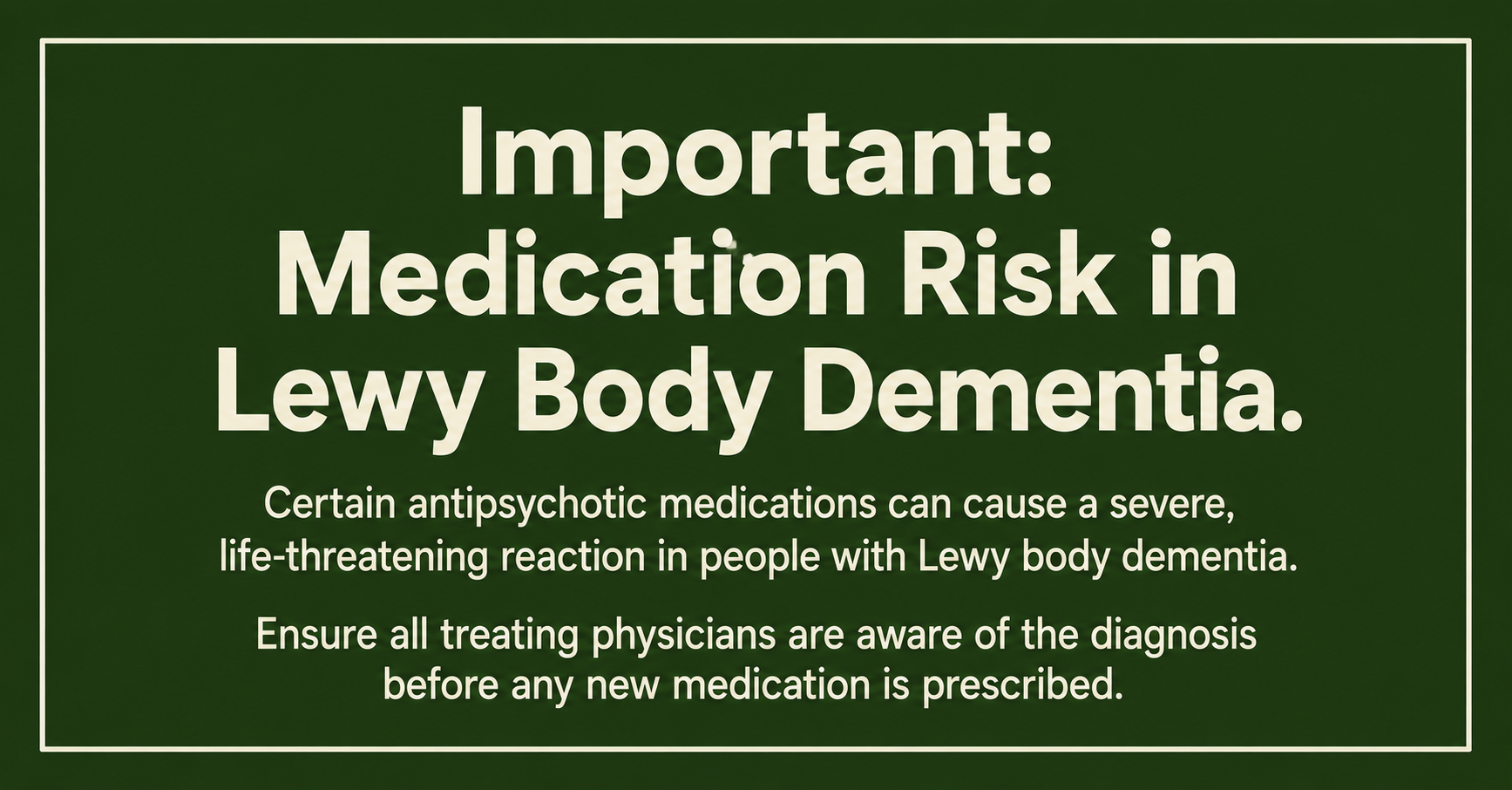
This is one of the most important reasons that an accurate diagnosis matters — and one of the reasons that families and caregivers should ensure that any treating physician is aware of a Lewy body diagnosis before any new medication is prescribed.
What care for Lewy body dementia actually looks like
Because Lewy body dementia affects so many systems simultaneously, care needs to be broader and more adaptive than care for Alzheimer's alone. Several things distinguish good Lewy body care in practice.
Understanding and responding to hallucinations appropriately
Attempting to correct or argue with a person who is experiencing visual hallucinations typically increases distress without reducing the hallucination. A more effective approach — one grounded in frameworks like Teepa Snow's Positive Approach to Care — involves acknowledging the person's experience, staying calm, and gently redirecting attention rather than confronting the content of what they're seeing. Caregivers who haven't been trained in this approach often respond in ways that inadvertently escalate the situation.
Managing fluctuations without overreacting
Cognitive fluctuations require caregivers who can recognize them for what they are and adjust accordingly. A person who is confused and nearly unresponsive in the afternoon is not necessarily declining rapidly — they may be fully engaged the following morning. Caregivers who understand this don't panic, don't over-stimulate during low periods, and don't miss opportunities for connection during clear ones.
Fall prevention and safe movement support
The combination of Parkinsonism and autonomic dysfunction makes falls a serious and ongoing concern. Good care includes attention to the physical environment, appropriate assistive devices, and techniques for supporting movement safely — including how to help someone rise from a chair or bed in a way that accounts for orthostatic hypotension. Rushing or startling someone with Lewy body dementia during movement transitions is a common and preventable cause of falls.
Medication awareness
Caregivers in the home are often the first to observe a change in condition following a medication adjustment. A caregiver who knows what neuroleptic sensitivity looks like, who understands why certain medications are risky in Lewy body dementia, and who knows to escalate to the family or care team promptly is a meaningful safety asset. This is one area where clinical oversight — an RN actively involved in monitoring and care coordination — adds particular value.
Sleep support
REM sleep behavior disorder and other sleep disturbances are common in Lewy body dementia and affect both the person with the disease and their family caregiver. Overnight care, if needed, requires specific attention to sleep safety — padded bed rails, floor mats, and sleeping arrangements that reduce injury risk during episodes.
What families should know about the trajectory
Lewy body dementia is progressive, and its course varies more than Alzheimer's. Some people decline relatively steadily; others experience periods of stability punctuated by significant drops. The autonomic and motor components of the disease mean that physical decline often runs parallel to cognitive decline, which increases care complexity over time.
Average survival from symptom onset is five to eight years, though this varies considerably. As the disease advances, care needs typically intensify across all domains — cognitive, physical, and medical. Families who plan ahead, build a care team with genuine Lewy body knowledge, and establish relationships with their loved one's neurologist or movement disorder specialist early are better positioned for the transitions ahead.
Hospice eligibility is something families often don't consider until late in the disease. In fact, people with advanced Lewy body dementia may qualify earlier than families expect, and hospice support — including nursing, aide services, chaplaincy, and bereavement support — can significantly improve quality of life for both the person with the disease and the family around them.
A note on finding the right care support
Lewy body dementia is not a condition that responds well to generic home care. The hallucinations, fluctuations, motor symptoms, medication sensitivities, and fall risks all require caregivers who have been specifically trained to understand and respond to this disease.
If your family is navigating a Lewy body diagnosis in the Raleigh or Triangle area, Guiding Light Dementia Care specializes exclusively in dementia care. Our caregivers are trained in Teepa Snow's Positive Approach to Care, which addresses the specific behavioral and communication challenges of Lewy body dementia directly. Our RN Director of Care Services provides clinical oversight for every client, including medication awareness and coordination with treating physicians.
"Lewy body dementia requires caregivers who understand not just what the disease is, but how to respond in the moment — to hallucinations, fluctuations, and movement challenges — in ways that reduce distress rather than amplify it."
Guiding Light Dementia Care provides specialized in-home dementia care in Raleigh, Durham, Chapel Hill, Cary, Wake Forest, and surrounding communities in the Triangle area of North Carolina.
We're Here to Help
If your family is navigating a Lewy body diagnosis, we're happy to talk through what you're facing and what support might look like. Reach us at (984) 205-2870 or schedule a consultation below.
Continue Reading