When most people think of dementia, they think of Alzheimer's disease. But dementia is not a single condition. It is an umbrella term for a group of symptoms caused by different underlying diseases, each with its own pattern, progression, and care implications. Vascular dementia is often cited as the second most common form of dementia after Alzheimer's, accounting for roughly 15 to 20 percent of cases in North America and Europe. Yet it remains far less understood by families navigating a diagnosis than its prevalence would suggest.
This guide is intended to help families understand what vascular dementia is, how it differs from Alzheimer's and other dementias, and what thoughtful care looks like for someone living with it.
What is vascular dementia?
Vascular dementia is caused by reduced blood flow to the brain, which deprives brain tissue of the oxygen and nutrients it needs to function. When brain cells are deprived of blood flow, whether through a stroke, a series of small strokes, or chronic disease of the small blood vessels that supply the brain, they are damaged or destroyed. The cognitive symptoms that result are what we call vascular dementia.
Unlike Alzheimer's disease, which is caused by the accumulation of abnormal proteins in the brain, vascular dementia is caused by vascular disease. This is the same underlying process that causes heart attack and stroke. That distinction has important implications for prevention, treatment, and care.
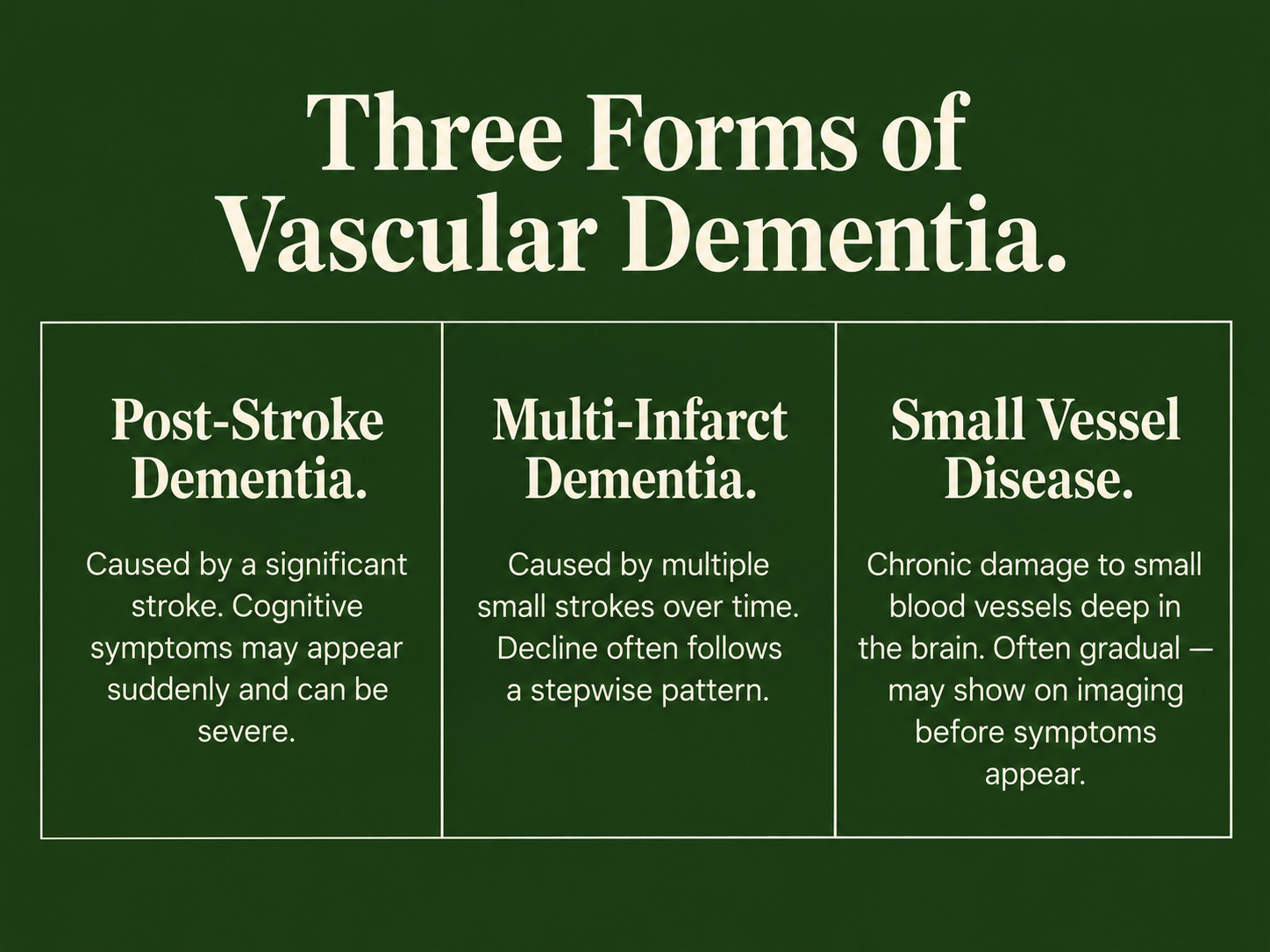
Vascular dementia is not one condition but a spectrum, and several subtypes exist depending on the nature and location of the vascular damage.
Post-stroke dementia
Post-stroke dementia occurs when a significant stroke causes damage to enough brain tissue to produce cognitive impairment. Cognitive symptoms may appear suddenly following the stroke and can be severe, depending on the extent and location of the damage.
Multi-infarct dementia
Multi-infarct dementia is caused by multiple small strokes, sometimes called mini-strokes or TIAs (transient ischemic attacks), that individually may produce minimal symptoms but cumulatively cause significant cognitive impairment over time. Families often describe a stepwise decline: the person seems relatively stable for a period, then drops to a new and lower level of function following another vascular event.
Small vessel disease
Small vessel disease (also called subcortical vascular dementia) results from chronic damage to the small blood vessels deep in the brain. Unlike post-stroke or multi-infarct dementia, this form often progresses more gradually and may not be associated with identifiable stroke events. It is frequently discovered on brain imaging as white matter changes, sometimes incidentally.
How vascular dementia differs from Alzheimer's disease
Understanding the differences between vascular dementia and Alzheimer's helps families make sense of what they are observing, and helps care teams tailor their approach appropriately.
Pattern of onset and progression
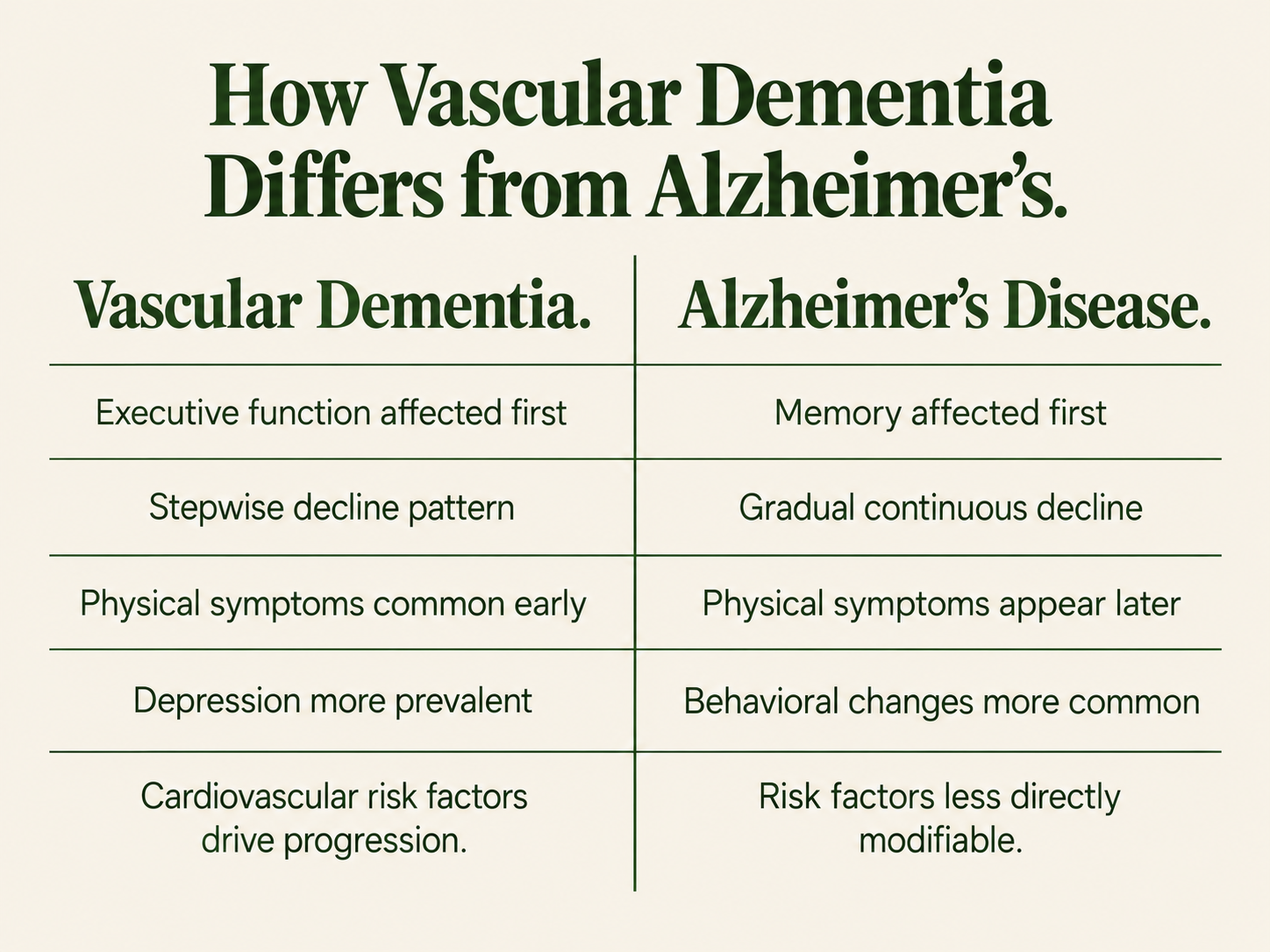
Alzheimer's disease typically begins gradually and progresses in a relatively continuous downward trajectory. Vascular dementia, particularly the multi-infarct subtype, often follows a stepwise pattern. Periods of relative stability are punctuated by sudden drops following additional vascular events. This pattern can be confusing and frightening for families who do not understand what is driving it.
Which cognitive domains are affected first
Alzheimer's disease characteristically begins with memory, specifically the ability to form new memories. Vascular dementia more often affects executive function first: the ability to plan, organize, sequence, and shift attention. A person with vascular dementia may have relatively preserved memory for recent events while struggling to manage tasks that require planning and judgment. Processing speed is also frequently affected, meaning that thinking and responding simply takes longer.
Physical symptoms
Vascular dementia is more commonly associated with physical symptoms than Alzheimer's disease, particularly in post-stroke and small vessel subtypes. These can include weakness or paralysis on one side of the body, problems with gait and balance, difficulty with bladder control, and slowed movement. The combination of cognitive and physical impairment means that care needs often involve both cognitive support and physical assistance from relatively early in the disease.
Mood and behavioral symptoms
Depression is particularly common in vascular dementia, occurring more frequently than in Alzheimer's disease. Emotional lability, which involves sudden and unpredictable shifts in mood or inappropriate emotional responses, is also a recognized feature sometimes called pseudobulbar affect. Apathy, withdrawal, and slowed emotional responsiveness are common. These symptoms affect quality of life significantly and require attention in care planning.
The role of cardiovascular risk factors
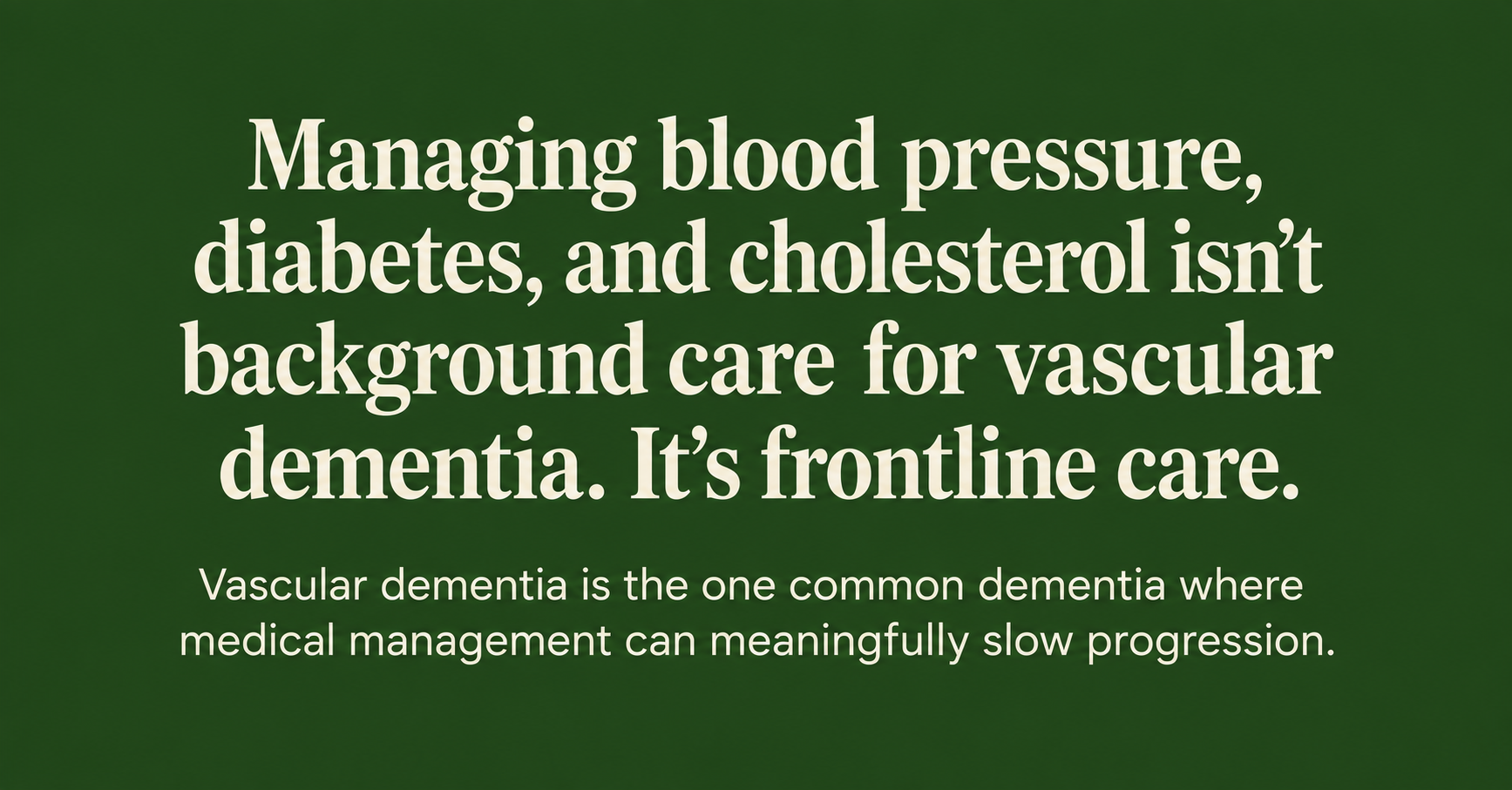
Unlike Alzheimer's disease, where risk factors are less modifiable, vascular dementia is directly linked to cardiovascular health. High blood pressure, diabetes, high cholesterol, smoking, atrial fibrillation, and obesity all increase the risk of vascular dementia by damaging blood vessels and increasing stroke risk. Managing these risk factors aggressively, through medication, lifestyle, and monitoring, can slow the progression of vascular dementia in ways that are not yet possible for Alzheimer's disease. This makes medical management an active and important component of care for someone with vascular dementia, not just a background consideration.
Why vascular dementia is frequently missed or misattributed
Vascular dementia is underdiagnosed for several reasons.
The symptoms, including slowed thinking, difficulty with planning, and mood changes, are sometimes attributed to depression, normal aging, or the aftereffects of a stroke rather than recognized as dementia in their own right. The gradual form associated with small vessel disease can be particularly easy to overlook because there is no clear precipitating event and the changes accumulate slowly.
Vascular dementia also frequently co-occurs with Alzheimer's disease, a condition called mixed dementia, which complicates diagnosis. Brain imaging showing white matter changes alongside amyloid pathology is not uncommon in older adults, and distinguishing the relative contribution of each condition to a person's symptoms can be challenging even for specialists.
Families who notice cognitive changes following a stroke should raise the question of vascular dementia explicitly with the treating physician or neurologist, rather than assuming that cognitive symptoms are simply a non-specific consequence of the stroke that will improve with time.
What care for vascular dementia actually looks like
Because vascular dementia affects cognition, physical function, mood, and cardiovascular health simultaneously, good care is necessarily broader than cognitive support alone.
Medical management is part of the care plan
Managing the vascular risk factors that drive the disease is not separate from dementia care. It is dementia care. Blood pressure control, diabetes management, anticoagulation for atrial fibrillation, cholesterol management, and medication adherence all directly affect the rate of disease progression. In-home caregivers who support medication routines, monitor for signs of vascular events, and coordinate with medical providers play a meaningful role in this dimension of care.
An RN actively involved in care oversight, monitoring for changes in condition, coordinating with physicians, and flagging early warning signs, is particularly valuable in vascular dementia, where the disease course is more directly influenced by medical management than in most other dementia types.
Executive function impairment shapes daily care
Because vascular dementia often affects planning and sequencing more than memory, daily care needs to be structured differently than Alzheimer's care. Tasks that require multiple steps, such as dressing, preparing a meal, or managing medications, need to be broken down and supported even when the person can still remember what they had for breakfast. Caregivers who understand that the person's difficulty is with sequencing and initiation, not memory, provide more targeted and effective support.
Physical care needs are often present earlier
The physical symptoms associated with vascular dementia, including gait instability, weakness, and incontinence, mean that physical care needs arrive earlier in the disease course than in Alzheimer's. Fall prevention is a priority from the outset. Home safety assessment and modification, appropriate assistive devices, and caregivers trained in safe mobility assistance are important components of in-home care for this population.
Depression and emotional symptoms need active attention
Depression in vascular dementia is often undertreated, partly because its symptoms overlap with other features of the disease, including apathy, withdrawal, and slowed response, and partly because people with dementia may not be able to accurately report their emotional state. Caregivers who observe mood and emotional patterns over time and communicate these observations to the care team contribute meaningfully to identifying and addressing depression when it is present. Engagement, routine, and meaningful activity are also protective against depressive symptoms and should be built into the care plan.
Preventing further vascular events
While no intervention can reverse existing vascular damage, reducing the risk of further events can meaningfully slow progression. Beyond medical management, this includes monitoring for warning signs of stroke or TIA: sudden weakness on one side, facial drooping, speech difficulty, sudden vision changes, and severe headache. Caregivers trained to recognize and respond to these signs are an important safety layer for people with vascular dementia living at home.
Communication adjustments
Slowed processing speed means that people with vascular dementia often need more time to respond than caregivers instinctively allow. Rushing, finishing sentences, or moving on before the person has had time to formulate a response can increase frustration and reduce meaningful communication. Slowing down, allowing silence, and resisting the urge to fill pauses are practical adjustments that make a significant difference in how supported the person feels.
What families should know about the trajectory
The course of vascular dementia is less predictable than Alzheimer's disease and depends heavily on whether additional vascular events occur and how well cardiovascular risk factors are managed. Some people experience a relatively stable period for months or years; others decline more rapidly following repeated events.
The stepwise pattern means that families sometimes experience the disease as a series of crises rather than a gradual adjustment. Planning ahead, having a care team in place, understanding what escalation looks like, and knowing what to do if another vascular event occurs, is more important in vascular dementia than in dementias with more predictable trajectories.
Given the direct link between cardiovascular health and disease progression, families should understand that medical appointments, medication adherence, and monitoring are not optional background tasks. They are active components of slowing the disease. Supporting these consistently is one of the most important things a care team can do.
A note on finding the right support
Vascular dementia's combination of cognitive, physical, mood, and medical dimensions means it requires a care approach that is genuinely comprehensive. Not caregivers focused only on companionship and personal care, but a team that understands the full picture of what the disease does and what good management looks like.
If your family is navigating a vascular dementia diagnosis in the Raleigh or Triangle area, Guiding Light Dementia Care specializes exclusively in dementia care. Our caregivers are trained in Teepa Snow's Positive Approach to Care, and our RN Director of Care Services provides clinical oversight for every client, including medication monitoring, coordination with treating physicians, and early identification of changes that warrant medical attention. For a disease as directly tied to medical management as vascular dementia, that clinical layer is not a luxury. It is a meaningful component of good care.
We are glad to talk through what your family is facing. Reach us at (984) 205-2870 or GuidingLightCare.com.
Specialized dementia care in the Triangle
Guiding Light Dementia Care provides specialized in-home dementia care in Raleigh, Durham, Chapel Hill, Cary, Wake Forest, and surrounding communities in the Triangle area of North Carolina.
Continue Reading