If you care for someone with dementia, you may have noticed that late afternoon and evening bring a different kind of hard. The person who was calm and cooperative at noon becomes agitated, confused, or accusatory by four o'clock. They pace. They want to go home, even when they are home. They ask where their mother is. They may become suspicious, tearful, or combative in ways that seem to come from nowhere.
This pattern has a name: sundowning. It is one of the most disruptive and least understood features of dementia, and it is also one of the most common reasons families reach out for professional help.
This article explains what sundowning is, why it happens, what makes it worse, and what caregivers, both family and professional, can do to reduce its severity and frequency.
What sundowning actually is
Sundowning, sometimes called late-day confusion or sundown syndrome, refers to a cluster of behavioral and psychological symptoms that tend to worsen in the late afternoon, evening, or nighttime hours in people with dementia. The symptoms vary from person to person but commonly include:
- Increased confusion and disorientation
- Agitation, restlessness, or pacing
- Anxiety or fearfulness
- Suspicion or paranoia
- Mood swings or emotional outbursts
- Resistance to care
- Attempts to leave the home
- Insisting on going somewhere, often described as wanting to "go home" even when already home
- Difficulty settling for sleep
Sundowning is not a diagnosis in itself. It is a pattern of symptom timing that occurs in the context of dementia, most commonly Alzheimer's disease, though it also appears in Lewy body dementia, vascular dementia, and other forms. Estimates vary, but research suggests that sundowning affects somewhere between twenty and forty-five percent of people with dementia at some point in their illness.
Why it happens: the neurological basis
The honest answer is that researchers do not fully understand sundowning, but several mechanisms are well-supported.
Disruption of the internal clock
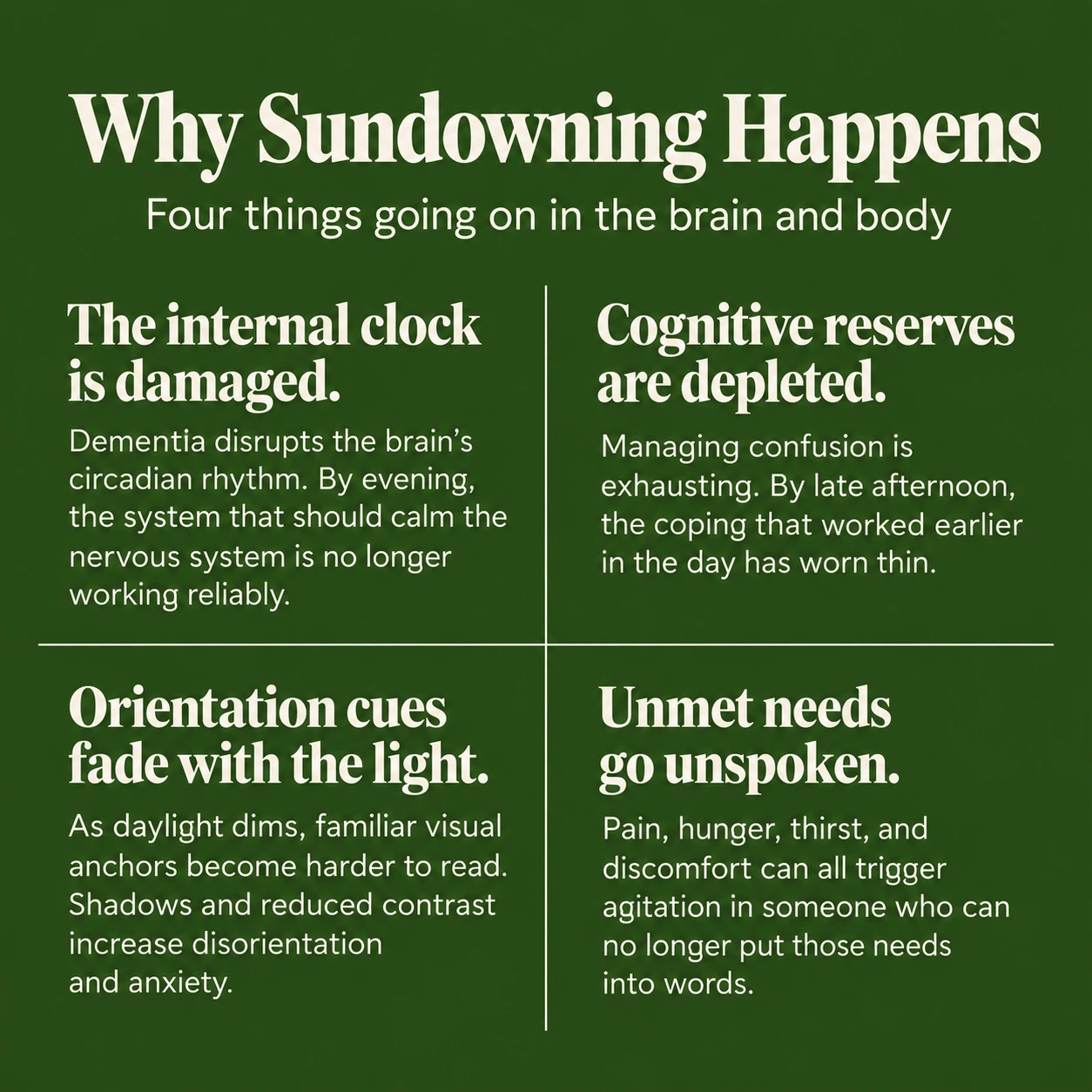
The brain has a region called the suprachiasmatic nucleus that functions as an internal clock, regulating sleep, wakefulness, hormone release, and many other biological rhythms over a twenty-four-hour cycle. In dementia, particularly Alzheimer's disease, this region is progressively damaged. The result is a loss of the normal circadian rhythm: the brain no longer receives and processes light-dark cues as reliably, and the internal clock that should wind down arousal in the evening stops working properly. Instead of calming, the nervous system remains in a state of heightened activation.
Accumulated fatigue and cognitive load
Managing the confusion and effort of living with dementia is exhausting. By late afternoon, the person has spent hours trying to process a world that no longer quite makes sense. Their cognitive reserves are depleted. The coping mechanisms that helped them appear more functional earlier in the day have worn thin. What was manageable at ten in the morning becomes overwhelming at four in the afternoon.
Reduced sensory input and orientation cues
As daylight fades, the visual environment becomes less distinct. The cues that help orient a person with dementia, familiar objects, faces, the quality of light, become harder to read. Shadows that appear as the day changes can be misinterpreted. The loss of clear environmental anchors increases confusion and anxiety.
Neurochemical shifts
The brain's neurotransmitter systems, including those that regulate mood, arousal, and sleep, follow daily rhythms that are disrupted in dementia. Shifts in acetylcholine, serotonin, and melatonin levels in the late afternoon may contribute to increased agitation and confusion at that time of day.
Unmet needs
Sundowning is also often triggered or intensified by unmet physical needs: pain, hunger, a need to use the bathroom, discomfort from a position held too long, or fatigue from inadequate napping earlier in the day. A person with dementia may not be able to articulate these needs, and the frustration of not being understood can surface as behavioral distress.
What makes sundowning worse
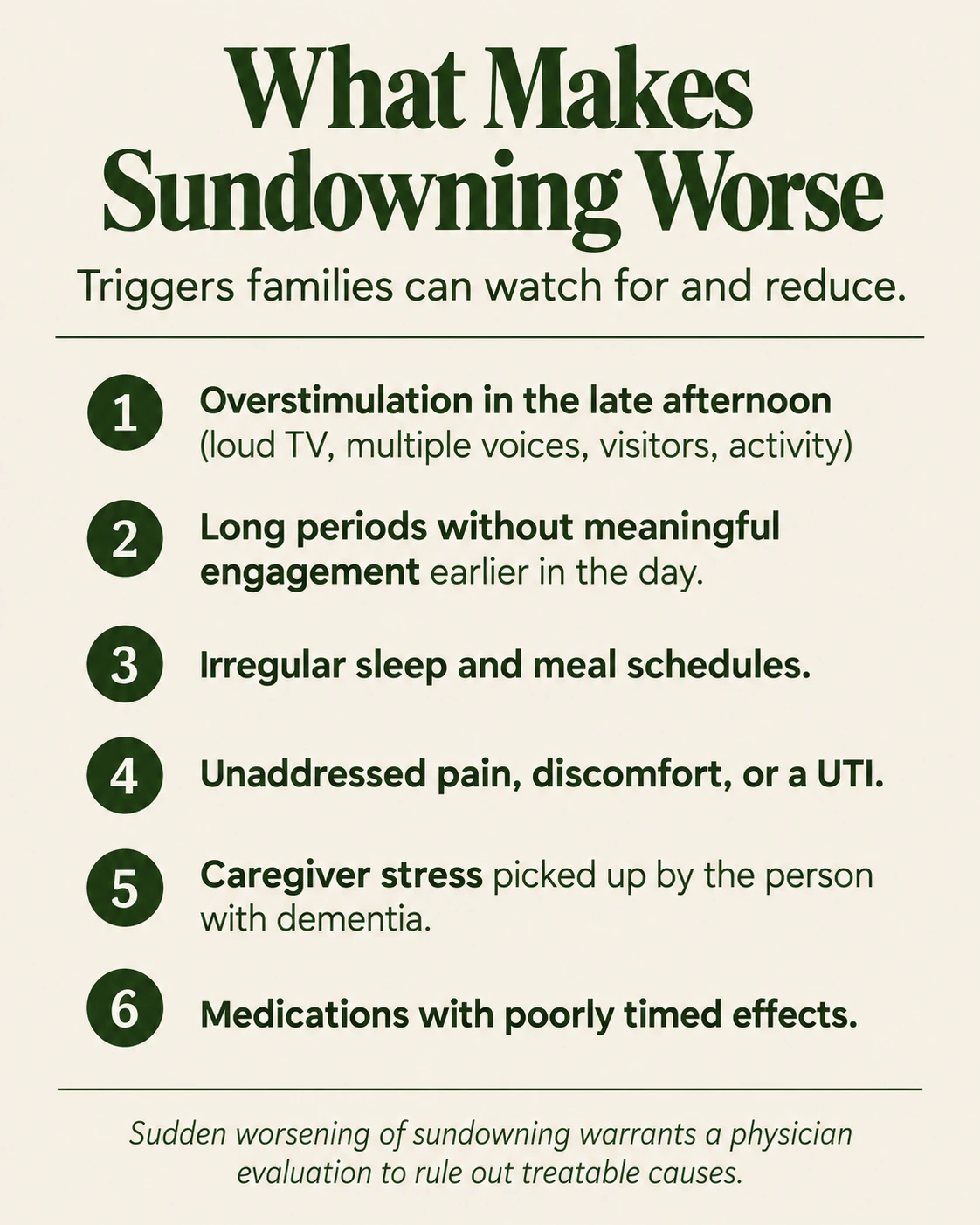
Understanding the triggers is half of the management picture. Sundowning tends to be more severe when:
The environment is overstimulating
Loud televisions, multiple conversations happening at once, a lot of activity or unfamiliar visitors in the late afternoon, all of these raise the level of cognitive demand at exactly the time when cognitive reserves are lowest.
The environment is understimulating
The opposite is also true. Long periods of sitting without engagement or meaningful activity can produce boredom, restlessness, and agitation that surfaces in the evening.
The sleep-wake schedule is irregular
Long or poorly timed daytime naps, irregular mealtimes, and inconsistent bedtime routines all undermine the circadian rhythm further. If the body cannot predict when sleep is coming, it cannot prepare for it.
The person is in pain or physical discomfort
Arthritis, urinary tract infections, constipation, skin discomfort from ill-fitting clothing, and many other physical conditions can all contribute to agitation. UTIs in particular are notorious for producing acute behavioral changes in older adults with dementia and should be on the differential whenever sundowning worsens suddenly.
The caregiver is stressed
People with dementia are remarkably sensitive to the emotional state of the people around them, often beyond what their cognitive status would suggest. A caregiver who is tense, frustrated, or hurrying picks up the pace of interaction and communicates urgency. That urgency reads as threat to someone whose brain is already struggling. Caregiver stress can escalate sundowning in real time.
Medications are contributing
Some medications taken in the morning have effects that peak in the afternoon. Some medications taken at night are sedating at the wrong time, disrupting sleep architecture and worsening daytime fatigue. A pharmacist or physician review of the medication schedule is worth doing when sundowning is severe.
What actually helps
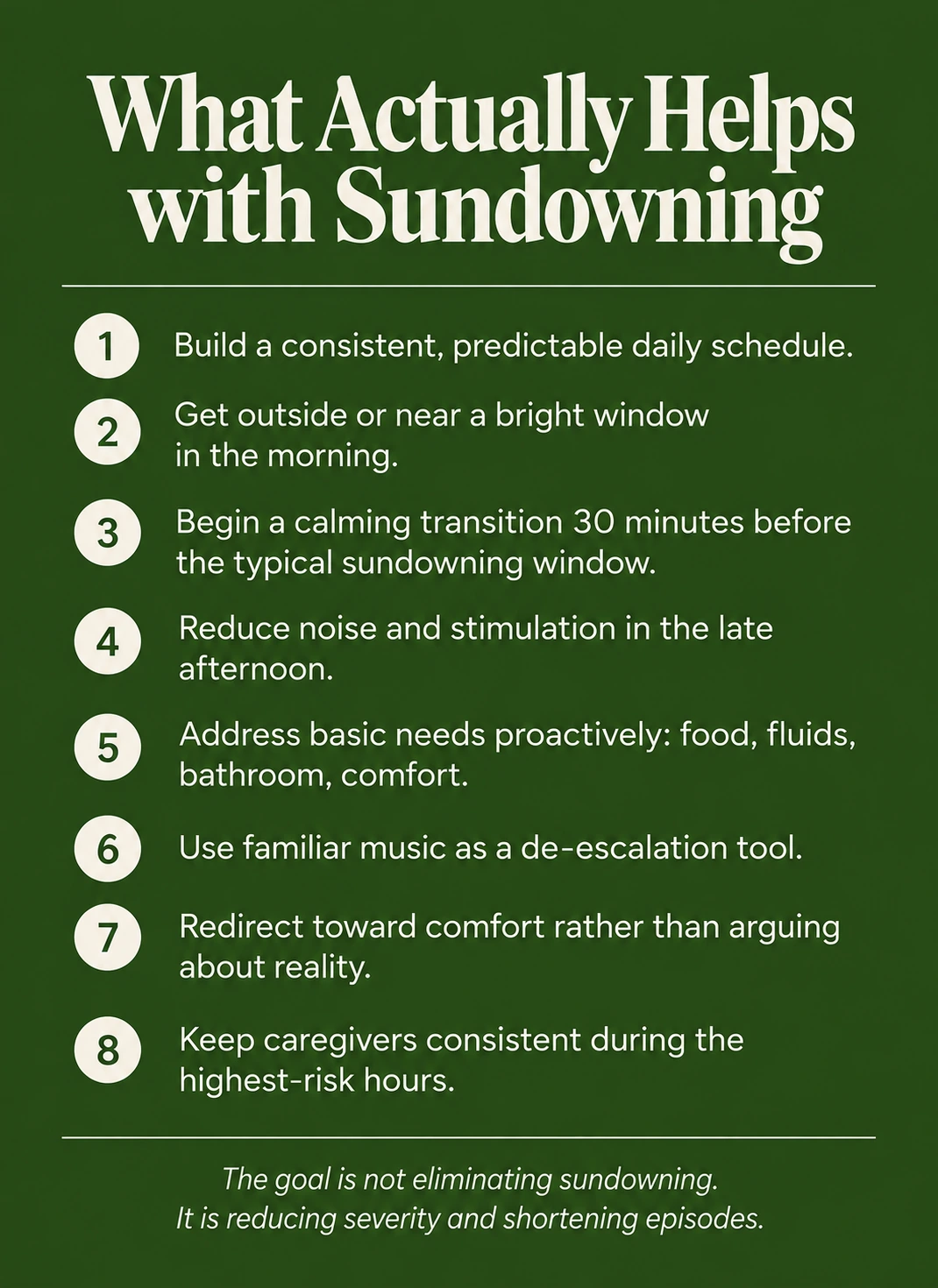
Managing sundowning is not about eliminating it entirely. For many people with dementia, some degree of late-day difficulty is persistent regardless of what caregivers do. The realistic goal is reducing the frequency and severity of difficult episodes, shortening their duration, and preventing the most distressing manifestations.
Structured, predictable days
Consistent waking times, mealtimes, activity periods, and bedtime routines give the brain's disrupted internal clock as much external structure as possible. This does not mean a rigid, institutional schedule, but it does mean that the shape of the day is reliable enough that the person's nervous system can begin to anticipate what comes next.
Morning light and meaningful activity
Getting the person outside or near a bright window in the morning helps reset the circadian rhythm and uses physical energy that might otherwise surface as restlessness in the evening. Morning is also typically the highest-functioning time of day for people with dementia, making it the best window for activities that require more engagement.
A calm late-afternoon transition
Identify the time of day when sundowning typically begins and build in a proactive calming transition at least thirty minutes before it. This might involve turning off the television, reducing household activity, putting on familiar and soothing music, sitting together for a simple task the person enjoys, or beginning a gentle walk. The goal is to get ahead of the escalation rather than responding to it after it has started.
Reduced stimulation in the late afternoon and evening
Lower the volume. Dim the overhead lighting slightly (but not to darkness, which increases disorientation) while using warmer accent lighting that signals the approach of evening. Limit visitors during the typical sundowning window. Reduce the number of decisions and demands being placed on the person.
Addressing basic needs proactively
Offer a light snack in the late afternoon. Make sure the person has had enough fluids during the day, since dehydration worsens confusion. Prompt bathroom visits on a schedule rather than waiting for the person to initiate. Check for physical discomfort.
Therapeutic fibbing and redirection
When a person with dementia insists they need to go home, arguing that they are home is usually ineffective and often escalating. A more useful approach is to acknowledge the emotional content of what they are expressing, often a feeling of being in an unfamiliar or unsafe place, and redirect toward comfort. "You seem like you want somewhere that feels familiar. Let's go sit in your favorite chair and I'll make you some tea" addresses the feeling without the argument.
Music as a de-escalation tool
Music from the person's young adulthood often reaches them in a way that conversation cannot, even in later stages of dementia. Familiar music activates neural pathways that remain relatively intact longer than many other cognitive functions. Playing familiar music during the typical sundowning window can significantly reduce agitation for some people.
Consistency in caregivers
For people with dementia, unfamiliar faces are stressful. A caregiver they do not recognize arriving during the highest-anxiety part of the day compounds the difficulty. Keeping care consistent during the late-afternoon and evening hours is one of the most practical things families can arrange.
Medical review when warranted
If sundowning is sudden in onset, significantly worsened, or is causing safety risks, a physician evaluation is appropriate. Rule out infection, medication interactions, pain, and other reversible contributors. For some people, low-dose pharmacological intervention may be appropriate when behavioral strategies are not sufficient, though medications for behavioral symptoms in dementia carry real risks and should be considered carefully.
A note on the caregiver experience
Sundowning is one of the primary drivers of caregiver burnout. The reason is obvious when you think about it: the evening hours are when family caregivers are already tired. They have gotten through the day, managed their own obligations, and are looking toward rest. Sundowning hits at exactly the moment when reserves are lowest, on both sides.
Families managing sundowning on their own, night after night, without relief, face a level of sustained stress that takes a serious toll. The question is not whether to get help but how and when. Evening and overnight caregiver support is one of the most valuable interventions available to families in this situation, both for the person with dementia and for the family members who are otherwise carrying that weight alone.
If you are navigating sundowning in the Triangle area
Sundowning is one of the situations where having caregivers specifically trained in dementia behavior makes a meaningful difference. A caregiver who understands what is happening neurologically, who knows how to read the early warning signs of an escalating episode and redirect before it peaks, and who can maintain a calm, regulated presence during a difficult hour provides something qualitatively different from general home care.
At Guiding Light Dementia Care, our caregivers are trained in Teepa Snow's Positive Approach to Care, which gives them specific, hands-on techniques for managing behavioral symptoms including sundowning. Our RN Director of Care Services remains involved in ongoing care planning and can help families think through sundowning management as part of a broader dementia care approach.
If sundowning is affecting your family and you would like to talk through what support might look like, we are glad to have that conversation. Reach us at (984) 205-2870 or GuidingLightCare.com.
Guiding Light Dementia Care provides specialized in-home dementia care in Raleigh, Durham, Chapel Hill, Cary, Wake Forest, and surrounding communities in the Triangle area of North Carolina.
Continue Reading